


By Kirsty Ludbrook
How Fragrance Deepens a Hotel Brand Experience
Here’s a scent memory that will never leave me!
We were living in Bali, running Enfants Paradis, a luxury botanical skincare brand Richard and I built from the ground up in Seminyak. Every detail of the store was considered: the lush garden surrounding it, the cooling greenery you walked through to reach the entrance, the hand-finished silk kimonos, the botanical formulations made from locally sourced ingredients.
But what people remembered most wasn’t what they saw. It was what they smelled.
We welcomed every guest with our signature fragrance — intoxicating South Asian florals, woody and green base notes — and a glass of chilled lemongrass tea. The scent drifted through the space and into the garden. Travellers who’d visited years earlier wrote to us saying the smell of tuberose or lemongrass still took them straight back.
That’s what scent does. It doesn’t just evoke a memory — it is the memory.
But this is what I learned building Enfants Paradis: the scent only worked because everything else was already in place. The brand identity, the store design, the product naming, the photography, the packaging, all of it created a coherent world. The fragrance deepened that world. Without the foundations, it would have just been a nice smell in a room.
That experience is a big part of why scent has its own chapter in Sensorial: The Nine Senses of Branding. And it’s what I explored in a recent article for WELLNESS Magazine on how the best hotels and wellness destinations use fragrance as a deliberate brand tool.
The foundation comes first
Multi-sensory branding and sensorial branding are terms that get used loosely. What they actually mean is this: every touchpoint a guest encounters — from the first Instagram image to the weight of the bathroom door — is an opportunity to communicate the brand’s character. Visual identity, spatial design, photography, typography, materials, light. These are the foundations. Get them right and you’ve given the brand something coherent to express. That’s when scent earns its place.
A signature fragrance built on a weak or undefined brand identity is just a nice smell. Built on a strong one, it becomes a memory trigger that works on guests for years after they’ve checked out.
How the best brands do it
The examples that stay with me are the ones where the scent is inseparable from the place’s identity.
The Eve Hotel in Sydney has its amenities “place-coded” through lemon myrtle and rosemary — native Australian botanicals that immediately locate you. You don’t need to read the label. You know where you are.
Six Senses partnered with Vyrao on a bespoke scent for their Ibiza property. Le Labo’s signature amenities for Edition Hotels have become so associated with that brand that guests buy them to take home — extending the brand experience long past checkout. Trudon worked with Le Bristol Paris on a fragrance that carries the weight of Parisian heritage in every note.
None of these are accidents. Each one started with a clear visual and spatial identity, a defined sense of place, and a brief that asked: what does this brand smell like?
The neurology is worth understanding
Unlike sight or sound, scent bypasses rational processing entirely. Smell molecules travel directly to the olfactory bulb, which connects straight to the amygdala and hippocampus — the brain’s emotion and memory centres. This is why a familiar fragrance can stop you mid-stride and transport you somewhere else completely.
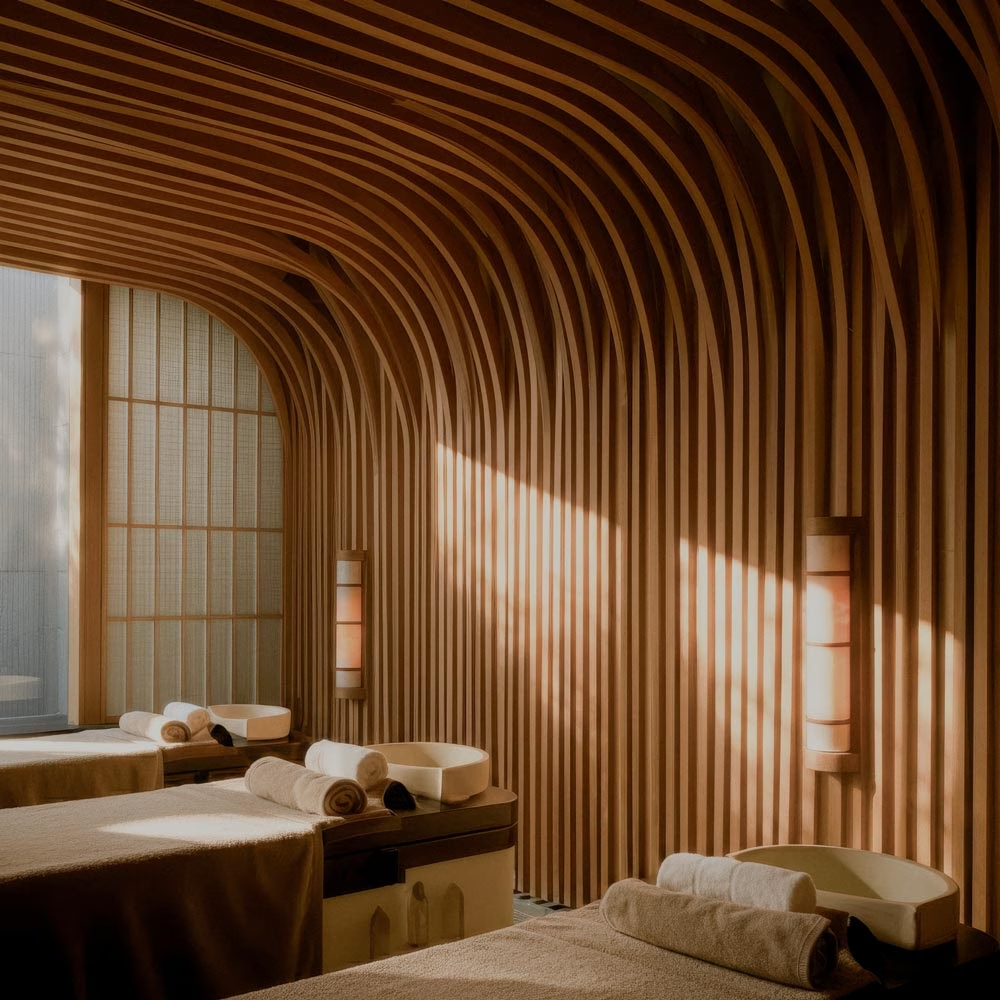
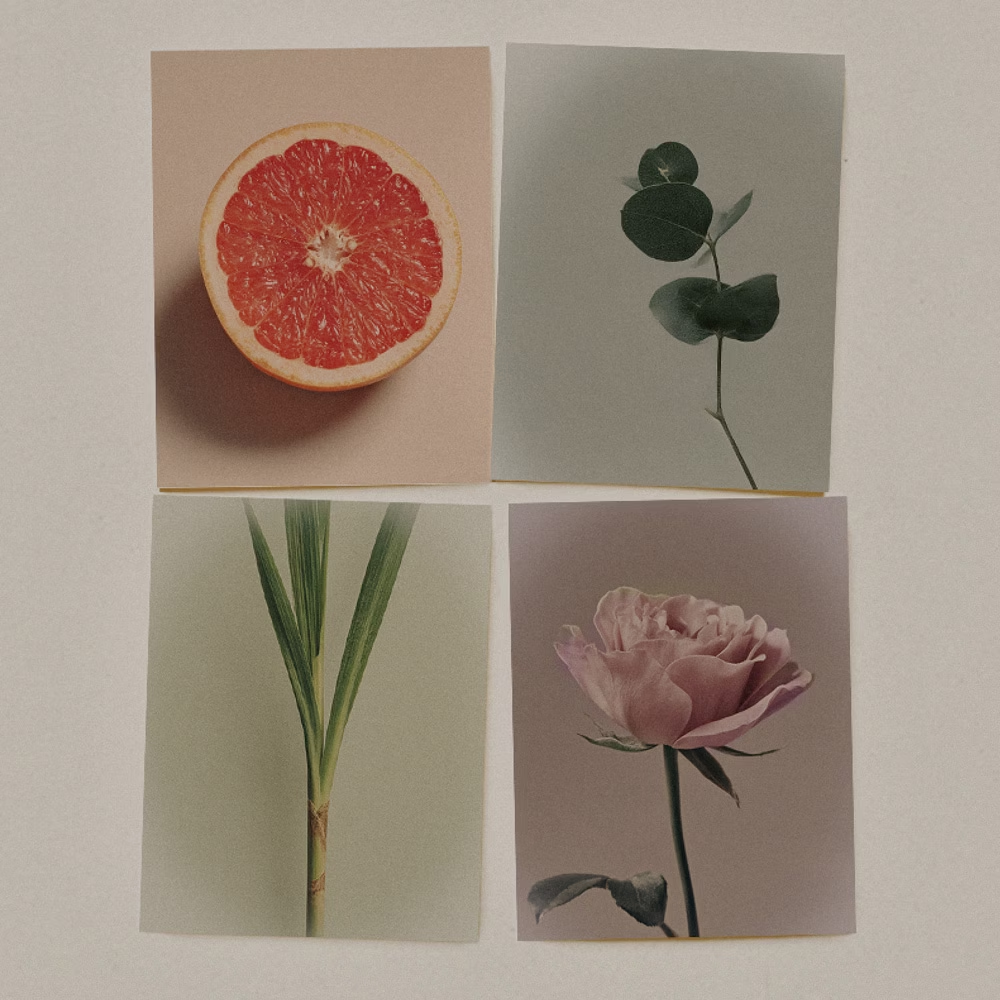
It also explains why scent is so effective as a brand tool when used well. Citrus and green notes energise and uplift — right for morning rituals, arrival spaces, fitness areas. Herbal and floral notes calm the nervous system — right for treatment rooms and welcome lounges. Woody and resinous notes ground and comfort — right for evening, for suites, for the quiet luxury of winding down.
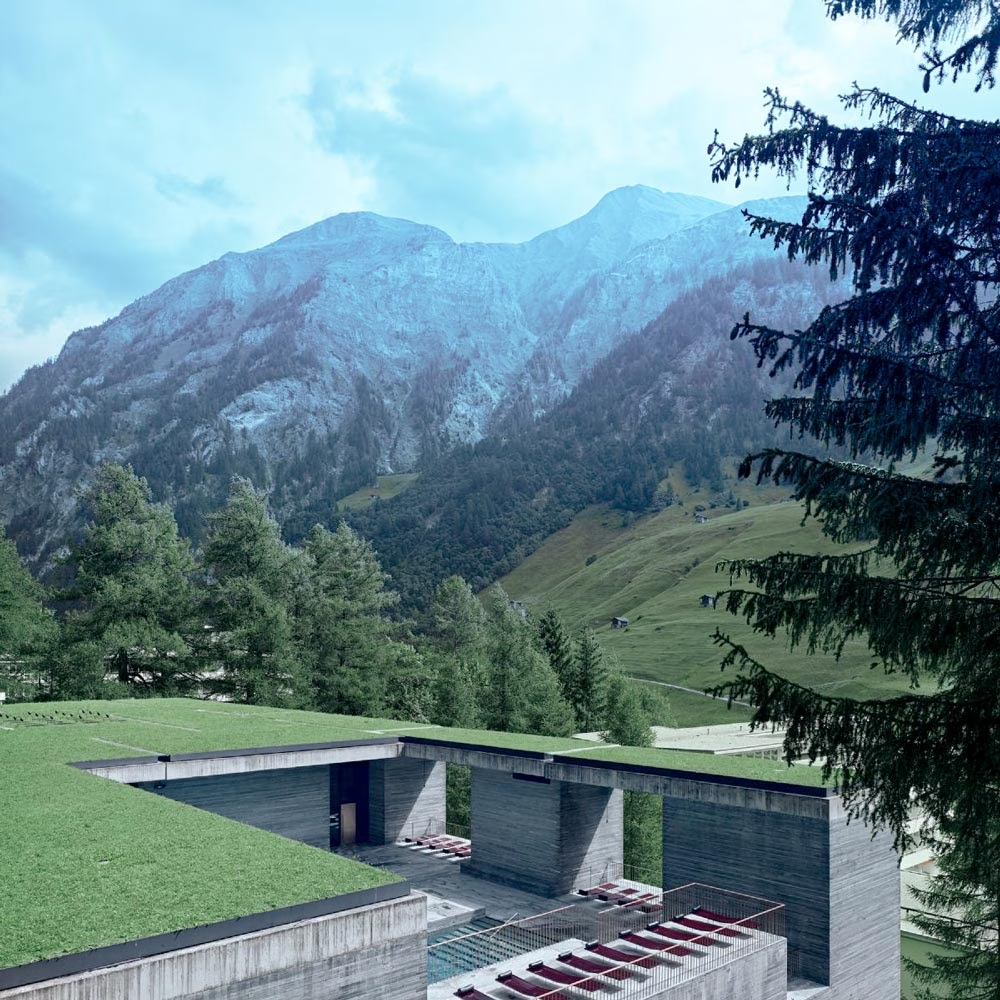
Coastal spas favour salt and aquatic notes. Mountain retreats lean into pine and worn timber. A thermal spa in an Alpine château might draw on coffee, waxed wood, leather. In every case, the scent mirrors the visual world the brand has already built.
We remember 35% of what we smell. Just 5% of what we see.
Which means a strong visual identity gets you recognised. The right scent gets you remembered.
That ratio matters enormously for hospitality brands competing in a crowded market. Recognition is table stakes. Memory is the goal. Fragrance — when it’s grounded in a coherent brand identity and a clear sense of place — is one of the most cost-effective ways to build it.
The scent journey doesn’t end at checkout
The best wellness destinations extend it through take-home products: signature candles, pillow sprays, shower steamers, essential oil blends. At Enfants Paradis we did this with an in-flight ritual serum roll — a plane-friendly companion carrying hydrating oils infused with natural botanical fragrance, designed to restore moisture and reconnect guests with the Bali experience long after they’d left.
Some properties now offer personalised scent experiences informed by pre-stay preferences. Others shift the scent profile across the day — lighter citrus notes in the morning, deeper woody tones by evening. Small decisions. Significant impact.
Scent is Chapter 7 of Sensorial
It’s one of nine senses I explore in Sensorial: The Nine Senses of Branding — my book on how wellness and destination brands build experiences that are felt, not just seen. If you want to understand how the senses work together to build brand memory and loyalty, it’s a good place to start.
The full WELLNESS Magazine article goes deeper on the neurology and the brand examples — link below.
And if you’re building a hotel or wellness brand and wondering where scent fits into the bigger picture, that’s exactly the kind of multi-sensory branding we thrive on at The Ludbrook Agency.
Kirsty Ludbrook is Creative Director of The Ludbrook Agency and author of Sensorial: The Nine Senses of Branding.
👉 Buy Sensorial: ludbrookagency.com/product/sensorial
VIEW MORE POSTS

By Richard Ludbrook
By Kirsty Ludbrook
By Richard Ludbrook
By Richard Ludbrook
By Richard Ludbrook

By Richard Ludbrook

By Kirsty Ludbrook
By Kirsty Ludbrook

By Richard Ludbrook
By Kirsty Ludbrook

