


Packaging
Design &
Retail
POS Design
Packaging
Design &
Retail
POS Design
Placemaking
Packaging Design
Packaging Innovation
Retail POS Display Design
Print Marketing Collateral
Stationery Suite
Editorial Design
Hotel Collateral
Restaurant Collateral
Minibar, Turndown
Merchandise Design
Packaging is often the most tangible expression of a brand — the moment identity becomes something a customer can hold, open, use, display or take home.
Ludbrook Agency is a Sydney-based branding and design studio creating packaging, retail point-of-sale, print and physical brand applications for beauty, wellness, hospitality, lifestyle and consumer brands.
Our work extends from packaging strategy and visual design through to range architecture, structural considerations, materials, print finishes, production and retail presentation. We consider how a product needs to communicate both individually and as part of a wider brand system — on shelf, online, in a hotel room, at a spa, in a retail environment or in the customer’s hands.
The result is packaging and collateral that does more than look considered. It helps customers understand the product, recognise the brand and remember the experience.
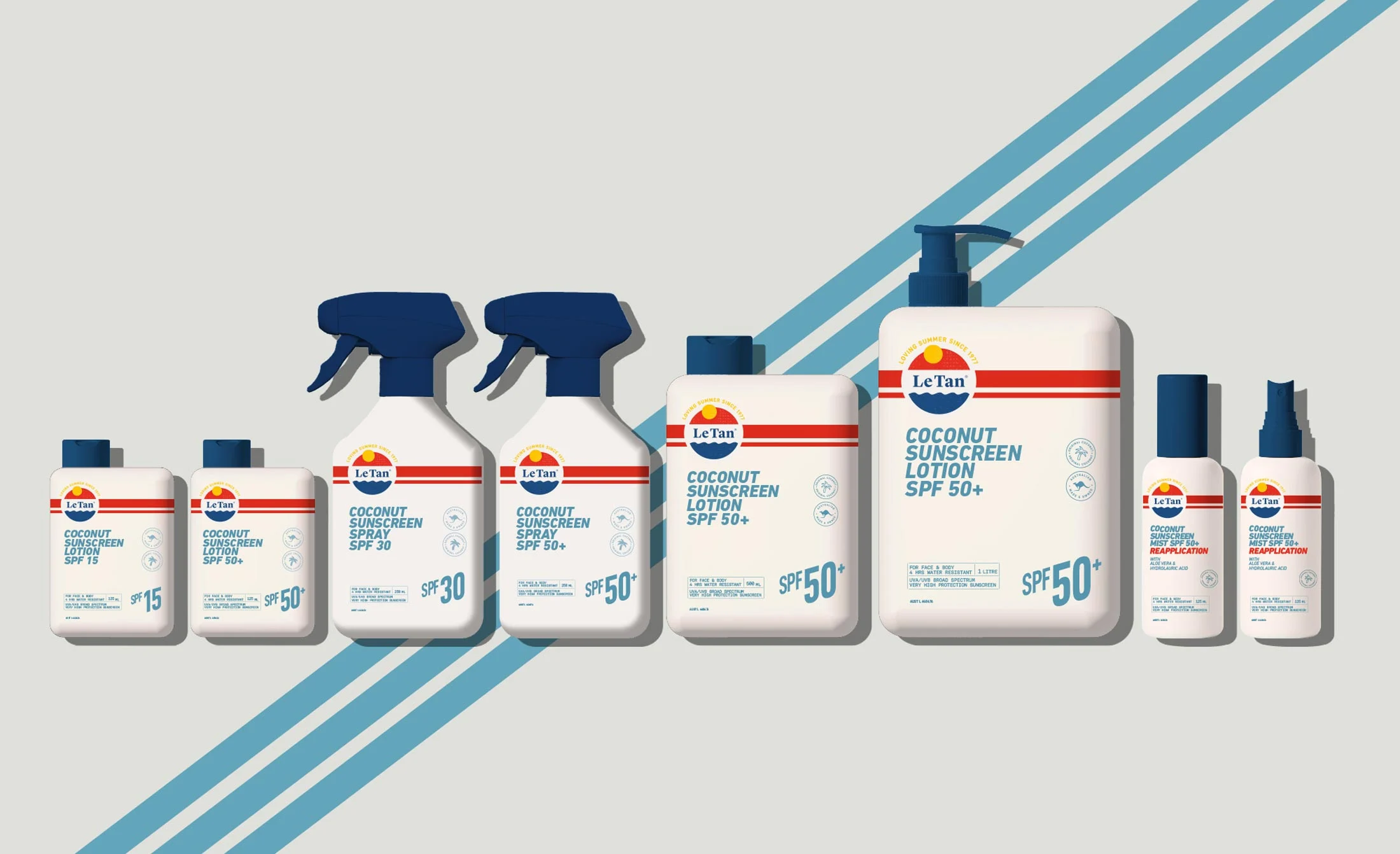
Le Tan — skincare and suncare packaging redesign
Packaging Design
Packaging has to work at several levels at once. It needs to attract attention, communicate what the product is, express the positioning of the brand and operate successfully within practical production constraints.
We design primary and secondary packaging for beauty, skincare, wellness, supplements, food, beverage, spirits and lifestyle products. This may involve a single hero product or an extensive range requiring clear hierarchy across variants, formats and product families.
Our packaging work considers typography, colour, imagery, information hierarchy, regulatory content and the relationship between the physical product and the wider visual identity.
Where we are developing a new brand, packaging is considered from the beginning rather than treated as an application added at the end.
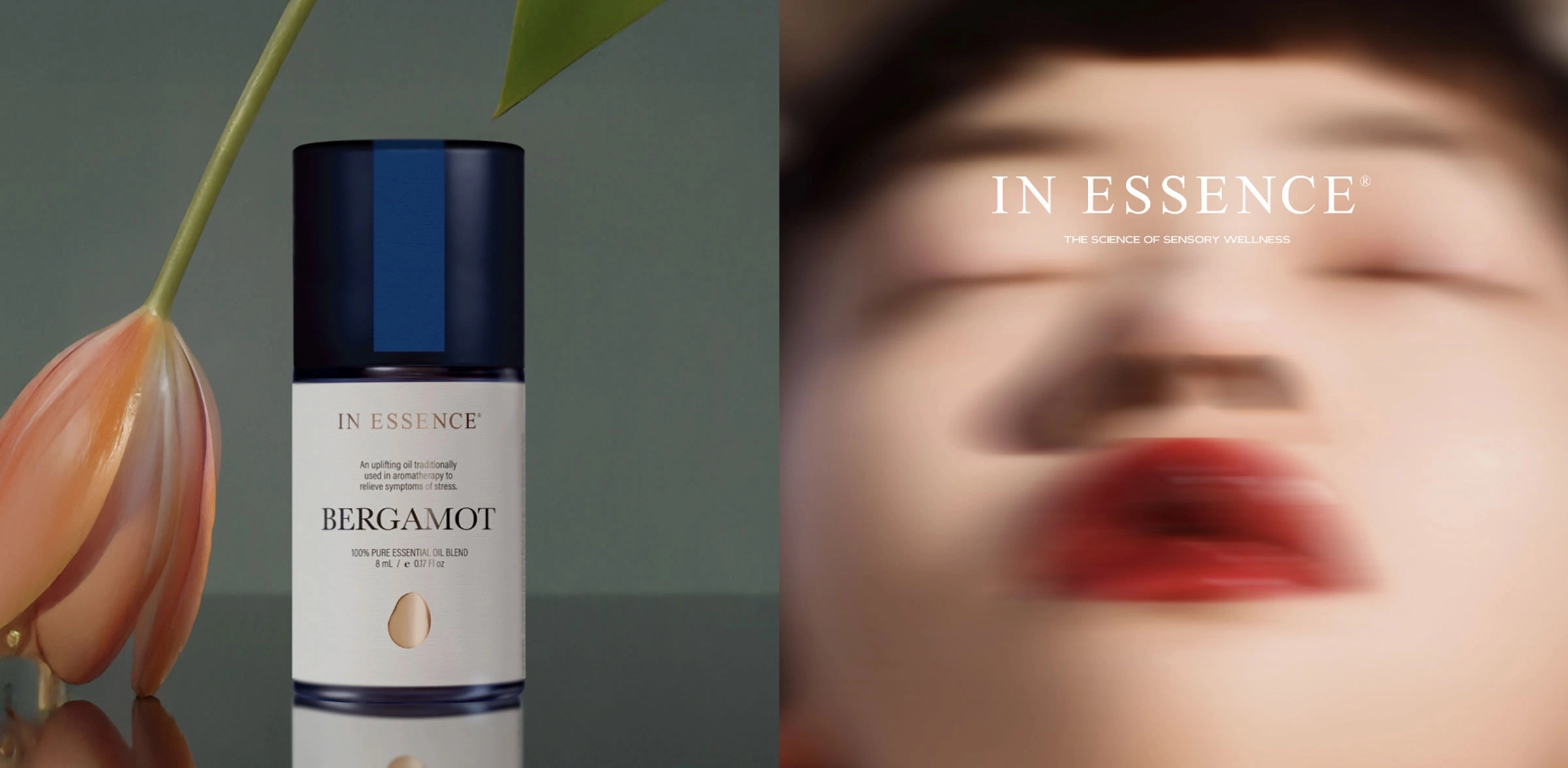
View our packaging project for In Essence.
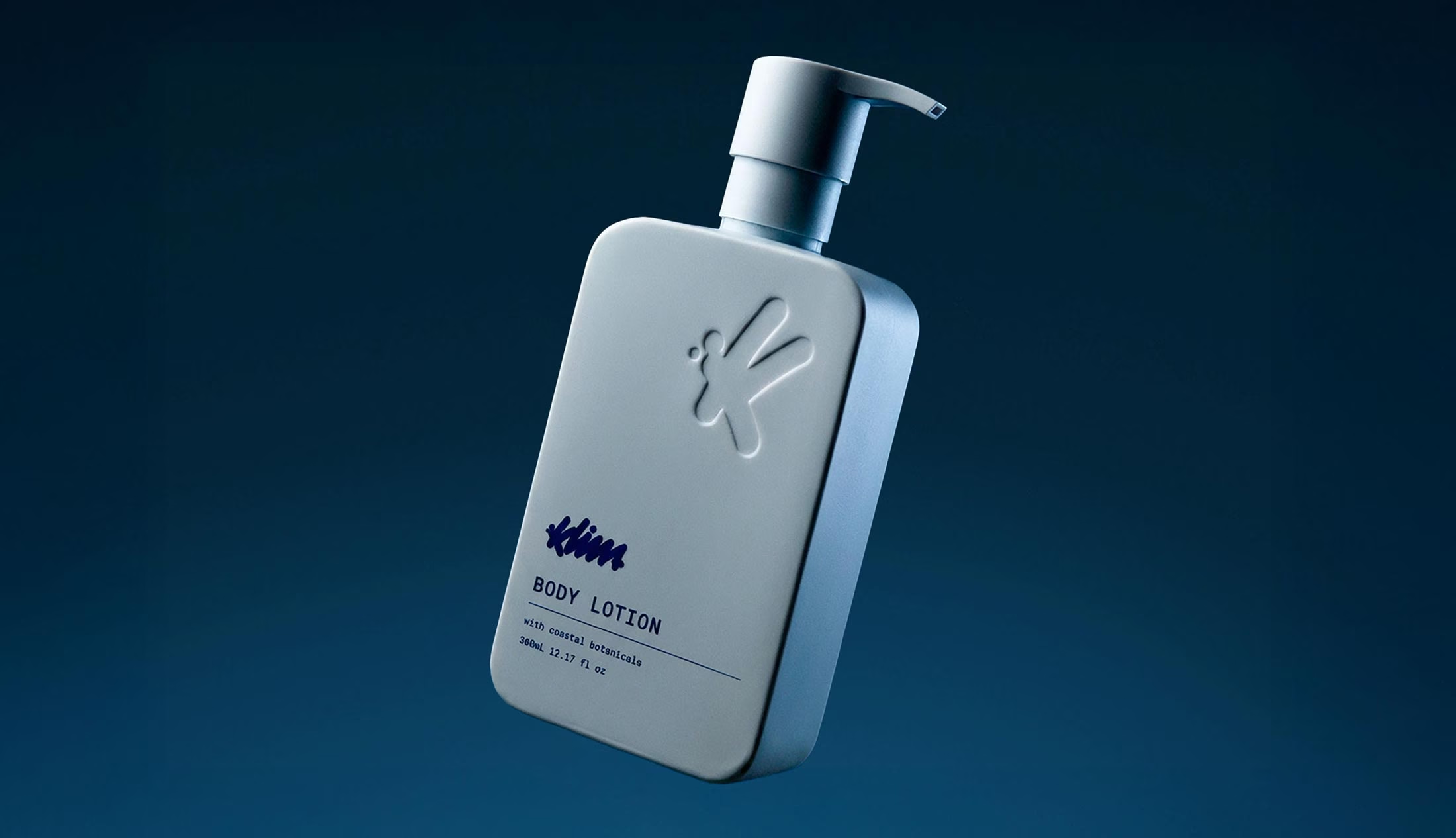
KLIMA — hotel amenity packaging and wellness brand system
Packaging Innovation, Materials & Production
The best packaging solutions balance creative ambition with how something is actually going to be manufactured, transported, displayed and used.
Depending on the project, we work with clients and production partners across structural packaging, material selection, sustainable alternatives, prototypes, print processes and specialist finishes. We also consider how packaging needs to perform across different formats, markets and production quantities.
For established brands this can include rationalising an existing packaging system or extending it across new product categories. For new brands, it can mean creating the visual and structural principles that allow an entire range to grow coherently over time.
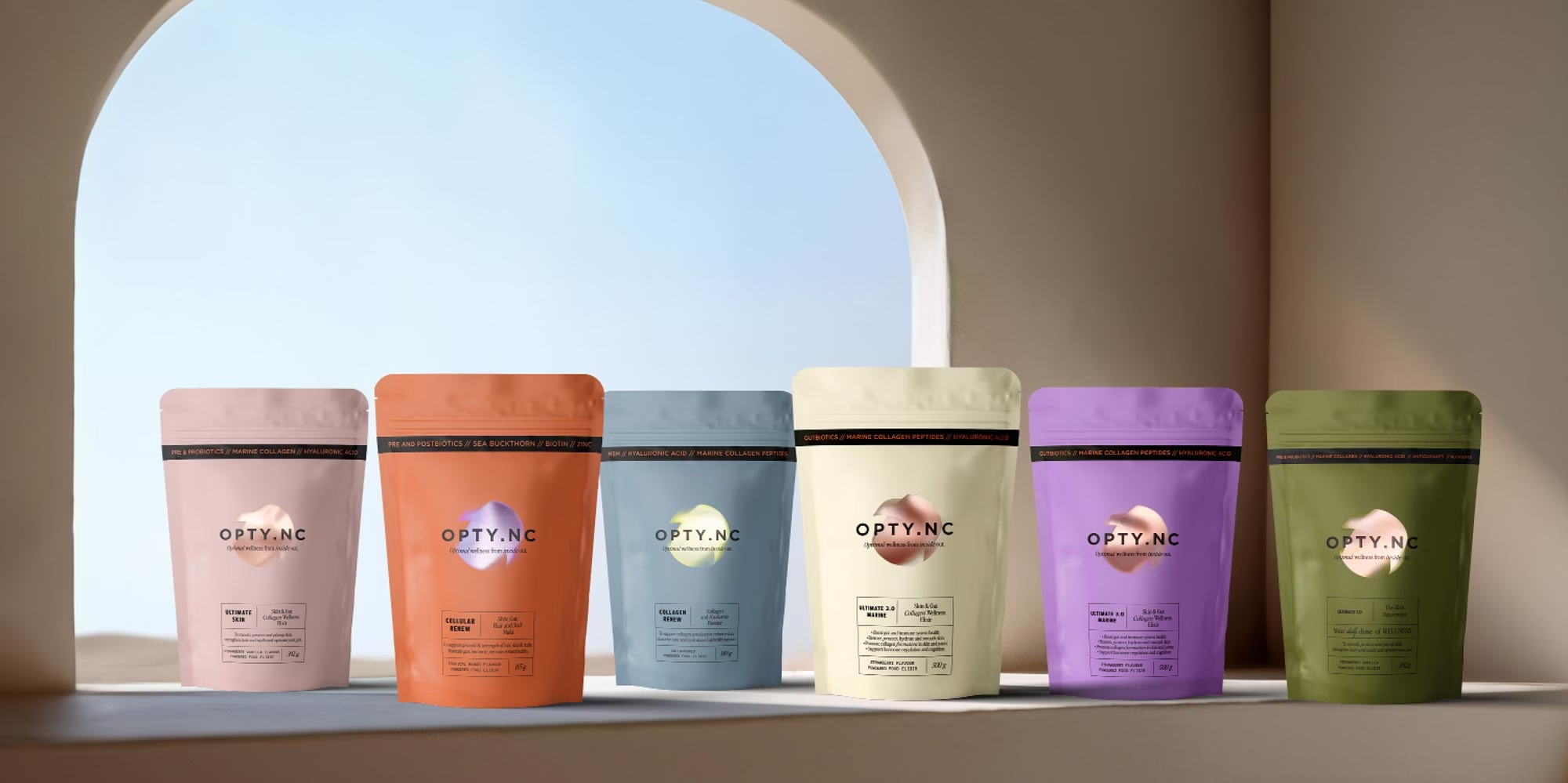
OPTY.NC — supplement packaging and beauty brand identity
Retail POS & Display Design
Once a product moves into a retail environment, packaging and point-of-sale have to work together.
We create branded retail POS systems that help products stand out while remaining consistent with the broader identity. Depending on the retail environment, this can include countertop units, product displays, promotional graphics, launch materials, testers, signage, display cards and campaign applications.
The objective is not simply visibility. Good retail POS should make the product easier to understand, strengthen recognition and create a clear relationship between the product, its packaging and the brand.
Our work in beauty and wellness is especially relevant here, where packaging, photography, product communication and retail presentation are often experienced together.
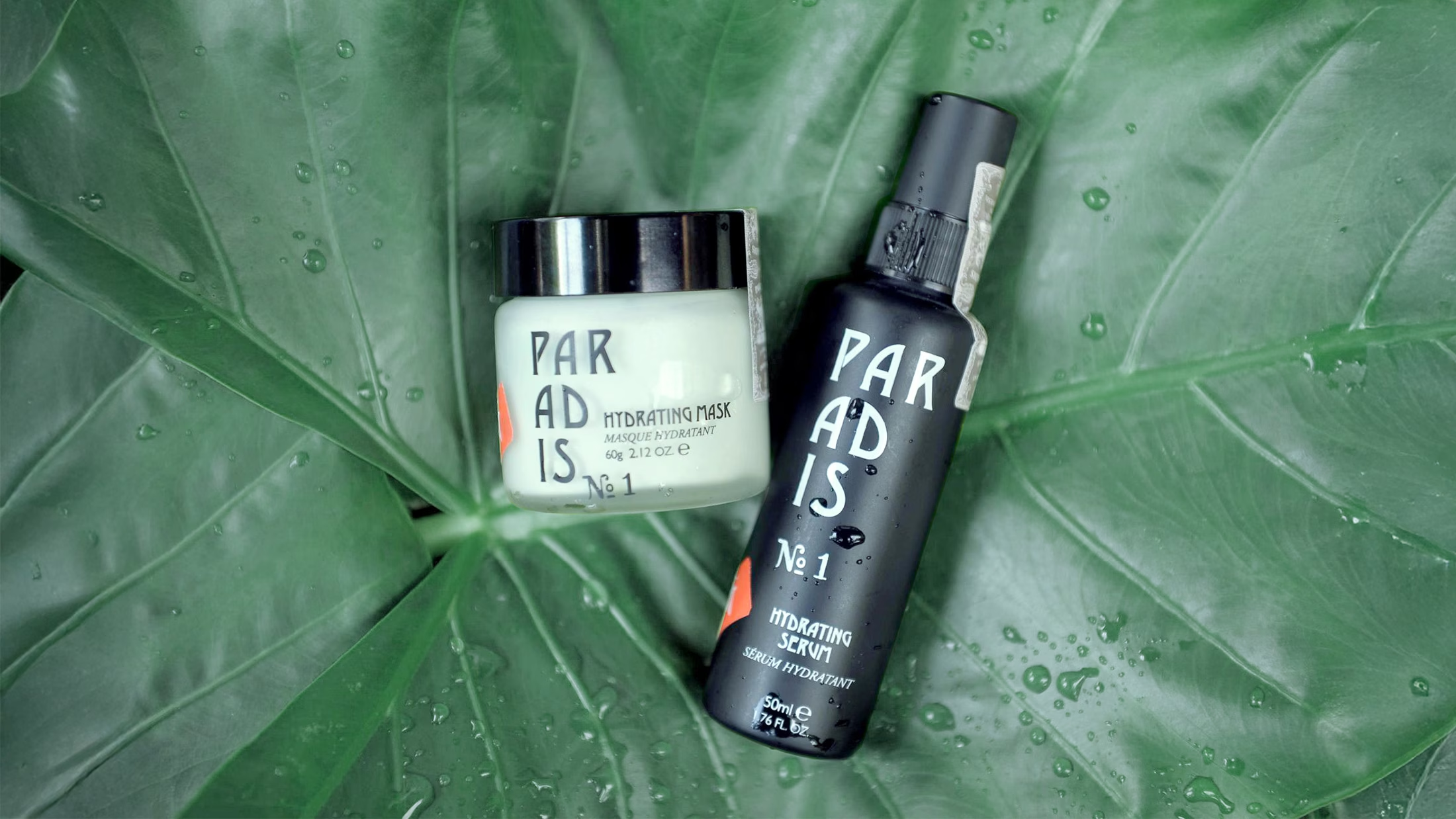
Enfants Paradis — botanical skincare packaging and retail design
Print, Editorial & Brand Collateral
Not every physical brand touchpoint is packaging.
We design print and collateral systems that give brands a consistent presence across communications, sales, events and customer experience. This can include stationery, brochures, presentation materials, invitations, menus, editorial publications, promotional pieces and branded marketing collateral.
Our background in brand identity, typography, editorial design and photography allows these pieces to be developed as part of one visual system rather than as disconnected marketing materials.
For brands with numerous customer touchpoints, a considered collateral system can be as important to recognition as the logo itself.
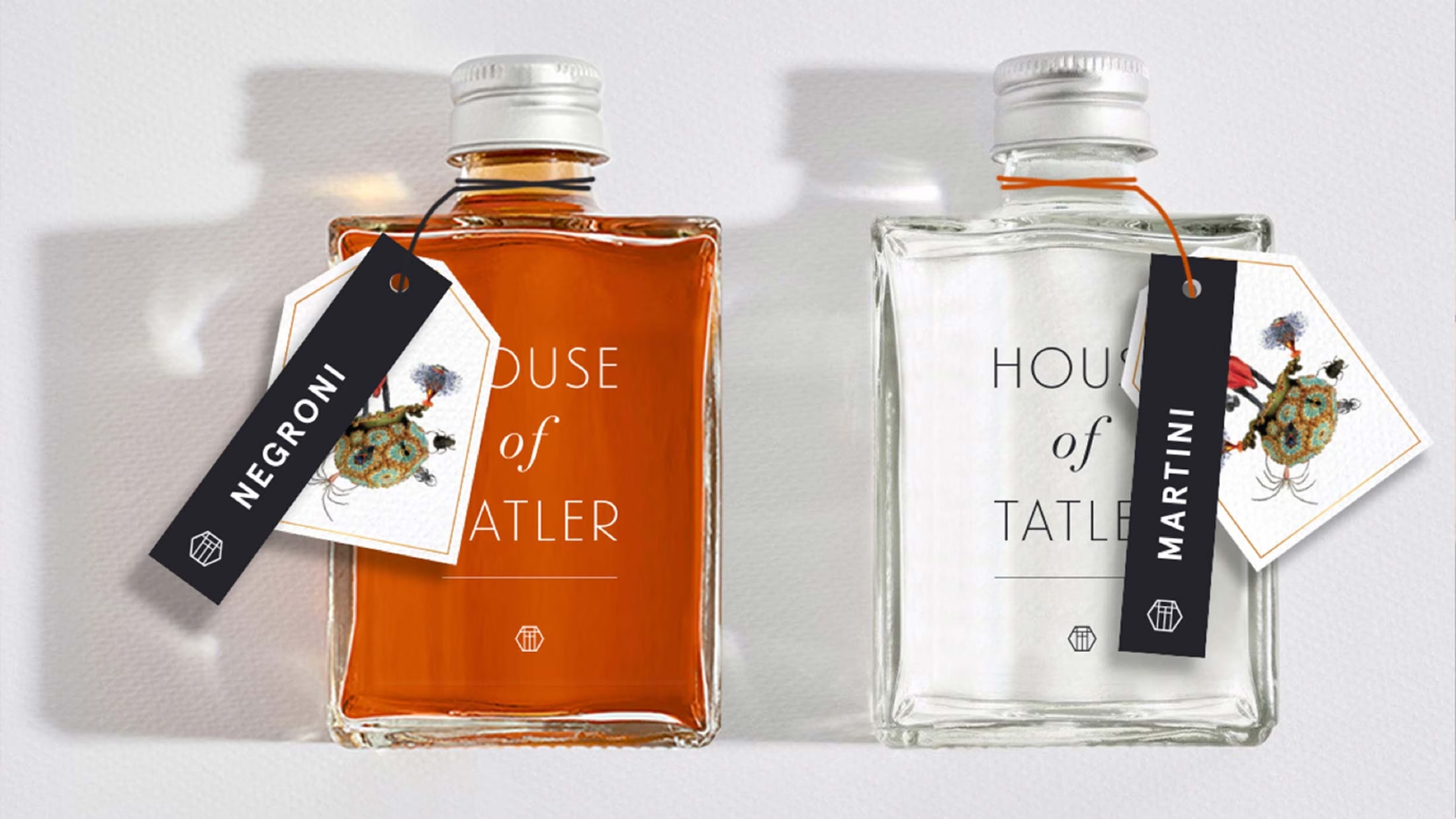
Tatler Supper Club — hospitality collateral, signage and packaging
Hospitality Collateral
For hotels, restaurants, bars, spas and wellness destinations, physical collateral plays a particularly important role because the guest encounters the brand repeatedly throughout their stay or visit.
We design menus, spa menus, in-room collateral, minibar materials, turndown pieces, guest information, restaurant collateral, packaging, gifting and other branded details that connect the identity to the physical experience.
The aim is consistency without repetition: every object should feel recognisably part of the same brand while responding to its particular function and setting.
Your Karma Spa work is very strong evidence here because it extended across packaging ranges, retail concepts, spa menus, signage, printed collateral, websites and photography.
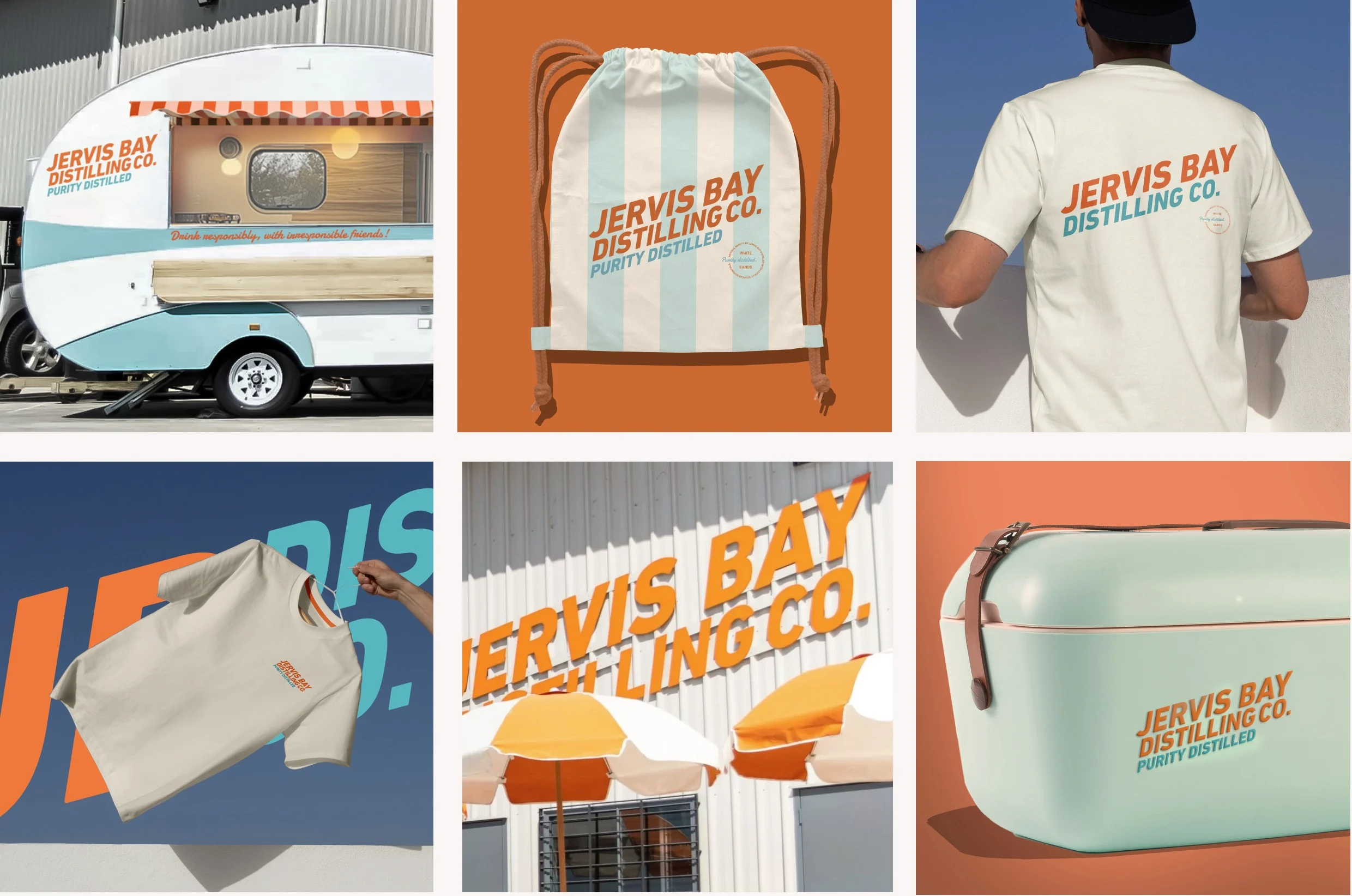
Jervis Bay Distilling merchandise and branded opjecrts
Merchandise & Branded Objects
Merchandise can extend a brand beyond its conventional communications and into objects people keep, wear or use.
We develop branded merchandise and product applications for hospitality, wellness, lifestyle and consumer brands — from uniforms and gifting through to bags, accessories, branded objects and retail products.
Rather than applying a logo to merchandise as an afterthought, we consider how the object contributes to the wider brand experience: its materials, colour, form, packaging and the context in which it is encountered.
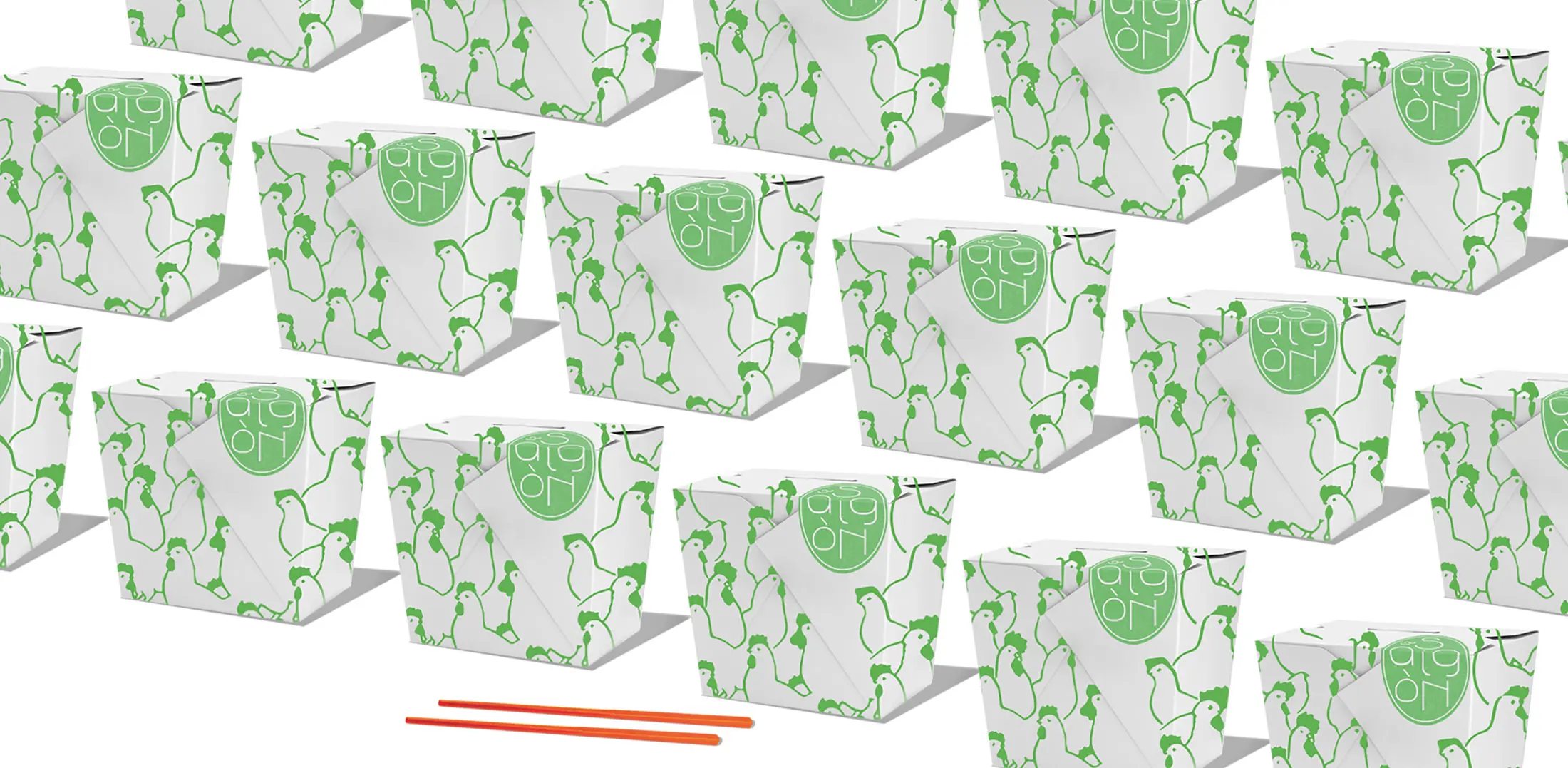
Saigon Street — restaurant branding, packaging and printed collateral for the Bali hospitality venue.
How We Approach Packaging Design
Every packaging project begins with the brand and the commercial context. We look at the audience, competitive set, positioning, retail environment and product range before moving into design.
For an established brand, this may mean understanding which existing assets have equity and which are limiting recognition or growth. For a new product, it may mean building the packaging system alongside naming, identity, photography and digital experience.
We then establish the design principles that need to work across the range — hierarchy, colour, typography, imagery, materials and product differentiation — before developing individual applications and production artwork.
The process allows creative decisions to remain connected to the original positioning rather than becoming a succession of isolated packaging treatments.
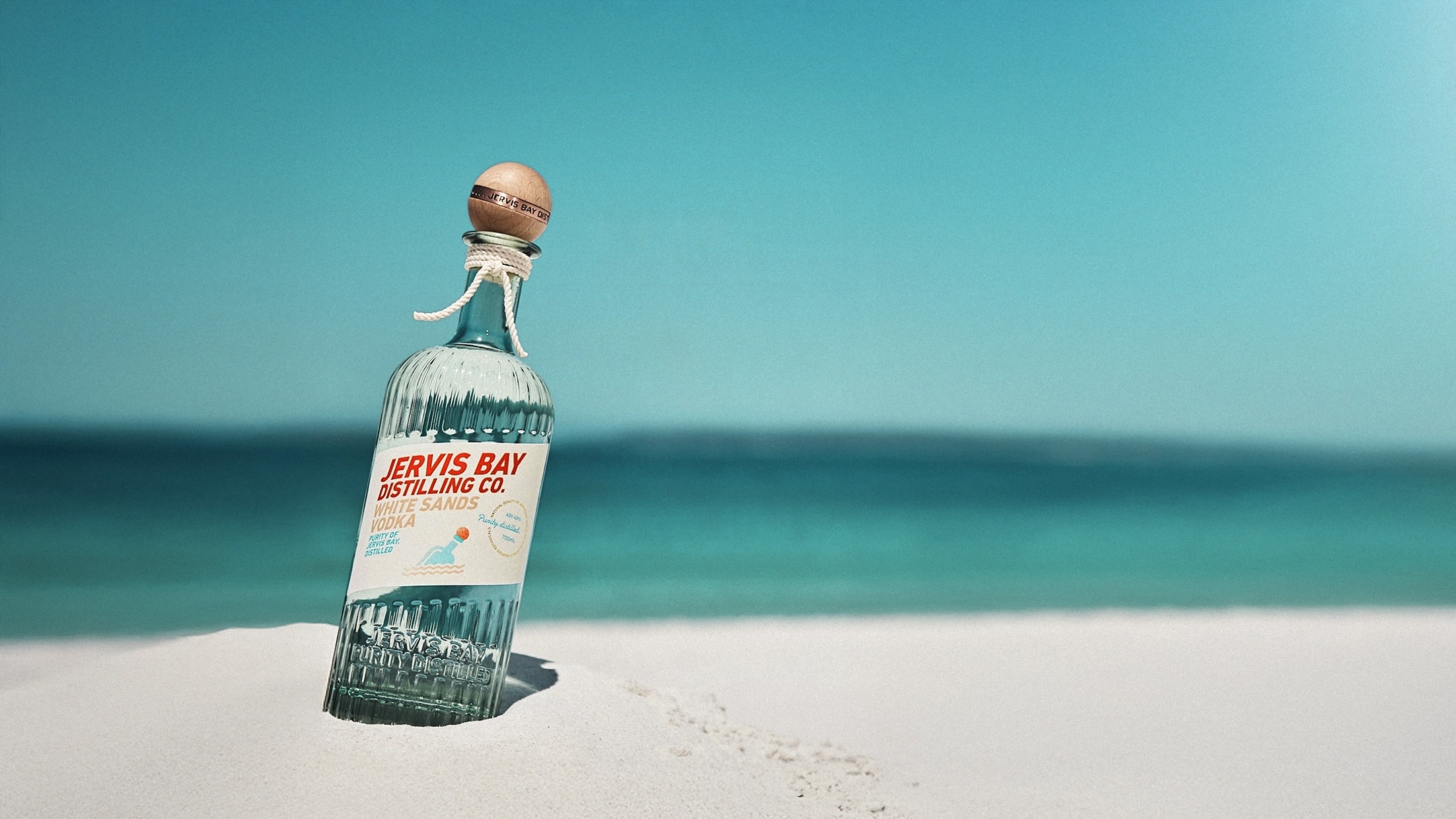
Jervis Bay Distilling — bottle design and spirits packaging
FAQs
A packaging design agency develops the visual and physical system through which a product is presented to customers. This can include packaging strategy, brand identity, range architecture, graphic design, structural considerations, materials, print finishes, regulatory information, artwork and production support.
At Ludbrook Agency, packaging design is considered as part of the broader brand experience. We look at how packaging works alongside identity, photography, digital, retail presentation and point-of-sale so that every customer touchpoint feels consistent and recognisable.
No. Ludbrook Agency is based in Sydney, but we work with clients throughout Australia and internationally.
Branding and packaging projects can be managed remotely, with meetings, presentations and approvals handled online where appropriate. For packaging projects, we can also work directly with a client’s existing printers, manufacturers and production partners, wherever they are located.
Our international work includes projects such as Mana Sanctuary and Saigon Street in Bali, alongside Australian projects across hospitality, beauty, wellness, lifestyle and consumer products.
Being based in Sydney gives us access to established local printers, packaging suppliers and production specialists, but it does not limit where we work. The structure of the project is determined by the client, the product and where production needs to take place.
Yes. We regularly work with printers, packaging manufacturers and specialist production partners to help carry a design through from approved artwork to finished packaging.
Our role can include preparing production artwork, reviewing specifications, checking proofs, coordinating colour and finishes, and working with suppliers to resolve practical issues before manufacture. Where structural packaging or specialist engineering is required, we collaborate with the appropriate manufacturer rather than trying to replicate that expertise in-house.
This is particularly important for projects such as In Essence, OPTY.NC, KLIMA, Karma Spa and Jervis Bay Distilling, where the final result depends on the relationship between design, materials, print and production.
We can also work with a client’s existing packaging supplier, or help identify the type of production partner required for a particular project.
Yes. We can redesign an existing packaging range without losing the brand recognition that may already exist.
The first step is to understand what is working, what is creating confusion, and where the current system is limiting the brand. That may involve reviewing hierarchy, typography, colour, pack architecture, product naming, variant recognition, materials and the relationship between individual products across the range.
In some cases the right approach is evolutionary rather than a complete redesign. Existing brand equity can be retained while improving clarity, consistency and shelf presence. In others, a broader repositioning may be needed so that the packaging better reflects changes in the product, audience or market.
Our work across In Essence, Le Tan, Karma Spa, OPTY.NC and Enfants Paradis provides useful examples of how packaging systems can be refined or extended across multiple products while maintaining a coherent brand identity.
Yes. Sustainability can be considered as part of the packaging design process, but the right approach depends on the product, production method, transport requirements, shelf life and the way the packaging will ultimately be used or disposed of.
We look at practical ways to reduce unnecessary material, simplify packaging formats, consider recyclable or lower-impact substrates, and assess whether reusable or refillable formats are appropriate. We also consider how sustainability decisions affect print methods, finishes, cost, durability and production quantities.
For projects such as BOLO, KLIMA, In Essence and OPTY.NC, packaging decisions sit within a broader discussion about materials, product use and brand positioning rather than being treated as a separate claim.
Where specialist material or manufacturing advice is required, we work with printers, packaging suppliers and production partners to identify options that are appropriate for the product and commercially realistic.
Yes. We can manage packaging production and printing as part of the wider design process, from preparing final artwork and specifications through to liaising with printers, packaging suppliers and specialist manufacturers.
This is particularly useful when packaging involves multiple formats, finishes or production methods. We can help coordinate materials, print techniques, colour matching, prototypes, proofs and production files so that the finished packaging remains consistent with the approved design.
Our role can vary depending on the project. In some cases we manage production directly; in others we work alongside an established supplier or manufacturer nominated by the client. For projects such as In Essence, OPTY.NC, KLIMA, Karma Spa and Jervis Bay Distilling, the relationship between design and production is important because packaging quality depends on how accurately the creative direction is carried through into the finished object.
Where specialist structural engineering or manufacturing is required, we work with appropriate production partners while retaining oversight of the brand, graphics and visual outcome.
Yes. We design the creative and branded components of retail point-of-sale displays, including product presentation, promotional graphics, countertop displays, testers, signage and supporting retail collateral.
Retail POS needs to work with the packaging rather than compete with it. We consider how products are grouped, what information needs to be understood quickly, how the brand is recognised from a distance, and how the display connects with the wider identity across packaging, photography and campaign material.
Our work includes retail POS and related brand applications for In Essence, OPTY.NC and KLIMA. In each case, the retail environment forms part of a broader brand system rather than being treated as a separate promotional exercise.
Where specialist structural development or manufacturing is required, we can work with appropriate production and display partners while retaining creative direction over the brand, graphics and presentation.
Yes. Beauty and wellness packaging is a significant part of our work. Our experience includes skincare, aromatherapy, supplements, spa products, hotel amenities and lifestyle products, with projects including In Essence, OPTY.NC, KLIMA, Karma Spa, Le Tan and Enfants Paradis.
For these categories, packaging often needs to communicate several things at once: product function, ingredients, brand positioning and the relationship between individual products within a wider range. We consider how each pack works on its own, how the range reads together, and how the packaging connects with photography, ecommerce, retail POS and the wider brand identity.
Depending on the project, our role can include packaging strategy, range architecture, graphic design, material and finish selection, production artwork and coordination with printers or packaging suppliers.
For internal linking, I would link each project name directly to its case study page where one exists. That makes this FAQ much more useful as an authority hub and supports the service page with real evidence, which is consistent with your website and SEO/GEO standards.

